http://www.youtube.com/watch?feature=player_embedded&v=vND53ZrQD9M
Korean Scientists Successfully Kill Cancer with Magnets
 In South Korea, scientists used a magnetic field to get cancer cells to actually self-destruct. The body removes old, defective, and infected cells through the process of programmed cell death (PCD), or apoptosis. In apoptosis, the rejected cell responds to certain signals sent by the body by fragmenting. Immune cells then consume these fragments. The magnets help trigger apoptosis. When apoptosis fails, however, rejected cells divide uncontrollably, developing tumors.
Magnets Induce Apoptosis
Professor Jinwoo Cheon of Yonsei University in Seoul and a team of scientists conducted experiments on bowel cancer cells using magnetic fields to induce apoptosis. They attached iron nanoparticles to antibodies, which bind to “receptor” molecules on tumor cells. These molecules cluster when the magnetic field is applied, triggering the “self-destruct” signal and thereby apoptosis. In the experiment, over half of the bowel cancer cells were destroyed when the signal for apoptopic clustering came into effect. Untreated cells remained unaffected and unharmed.
Big Pharma’s Response?
In a related experiment, the scientists performed the same therapy on zebra fish, which caused them to grow unusual tails. More trials are in the works.
“We have demonstrated that apoptosis signaling can be turned on in-vitro (in the laboratory) and in a zebra fish in-vivo (living) model by using a magnetic switch,” say the scientists. “Our magnetic switch may be broadly applicable to any type of surface membrane receptors that exhibit cellular functions on clustering.”
The study is to be published in the journal Nature Materials. One must wonder how this form of therapy—one that does not, as of yet, line the pockets of Big Pharma—will develop in the world of traditional medicine. Drug manufacturers (literally) bank on perpetual sickness, andcancer drugs have shown time and again to worsen tumors.
But regardless of any potential alternative treatments, big pharma will continue to push these dangerous ‘solutions’ on the public. Even while numerous cancer-fighting foods like turmeric, ginger, garlic, papaya leaf extract, berries, and many more exist, the pharmaceutical industry and mainstream medicine won’t recognize these as solutions.
Read more: http://naturalsociety.com/scientists-successfully-kill-cancer-magnets/#ixzz29C6s07Yy
Korean Scientists Successfully Kill Cancer with Magnets


Charges against William Bryan Jennings, the former Morgan Stanley (MS) U.S. bond-underwriting chief accused of stabbing a New York cab driver over a fare, will be dropped, police said.
“I’m aware that the charges are being dropped,” Detective Chester Perkowski of the Darien,Connecticut, police department said today in an interview. He declined to comment further.

William Bryan Jennings, Morgan Stanley’s U.S. bond-underwriting chief in the U.S., is shown in this undated photo provided to the media by the Darien, Connecticut police department on March 4, 2012. Source: Darien Police Department via Bloomberg
Jennings was accused of attacking the driver, Mohamed Ammar, on Dec. 22 with a 2 1/2-inch blade after a 40-mile (64 kilometer) ride from New York to the banker’s $3.4 million home in Darien. Ammar, a native of Egypt and a U.S. citizen, said Jennings told him, “I’m going to kill you. You should go back to your country,” according to a police report.
Jennings faced assault and hate-crime charges, each of which brings a maximum sentence of five years in prison. He was also charged with not paying the fare, a misdemeanor. He pleaded not guilty March 9.
Eugene Riccio, Jennings’s attorney, wouldn’t confirm that the case had been abandoned.
“All I’m saying is we’re showing up,” he said today in a phone interview. “We have a court date Monday, and we’re going to be there.”
Ex-Morgan Stanley Executive’s Stabbing Charges Dropped


Nonviolent prisoners increasing faster than violent prisoners in America
Coming just a week after the Justice Department announced that 1.8 million Americans were behind bars, a new report by the Justice Policy Institute has found that, for the first time, over one million nonviolent offenders were incarcerated in America in 1998.
"Prisons are built and mandatory sentencing laws passed on the specter of Willie Horton," stated Vincent Schiraldi, the Institute's Director; "But increasingly, those prisons are filled with the 'gang that couldn't shoot straight'."
Entitled America's One Million Nonviolent Prisoners, the JPI analysis of recent United States Justice Department data showed that over the past 20 years, the nonviolent prisoner population has increased at a rate much faster than the violent prisoner population, and that 77% of the people entering prisons and jails were sentenced for nonviolent offenses. Since 1978, the number of violent prisoners entering America's prisons doubled, the number of nonviolent prisoners tripled, and the number of persons imprisoned for drug offenses increased eight-fold.
The report, co-authored by John Irwin, professor emeritus from San Francisco State University, and Jason Ziedenberg, JPI Policy Analyst, also catalogued the tremendous costs of imprisoning over a million nonviolent offenders. The $24 billion spent last year by federal, state and local units of government to incarcerate 1.2 million nonviolent offenders was almost 50% larger than the entire federal welfare budget ($16.6 billion) which provides income supports for 8.5 million people, and represents six times what the federal government will spend on child care for 1.25 million children. Further, America is spending more building prisons ($2.6 billion) than universities ($2.5 billion). Overall, the combined expenditures for America's prisons and jails have increased from $5 billion in 1978 to $31 billion in 1997.
"Spending more to lock up nonviolent offenders than to feed or educate our country's children is a cruel, self-fulfilling prophecy," stated JPI Policy Analyst Jason Ziedenberg. "It's not just bad public policy, but it's downright mean-spirited."
The study also found that the overwhelming majority of male jail inmates are not incarcerated for a violent offense (82.4%) and have no violent offense history (64%). That is even truer for America's fastest growing inmate populationwomen. Eighty-five percent of female jail inmates are incarcerated for a nonviolent offense, and 83.1% of female jail inmates have no violent prior offenses. The research corroborated the findings of other studies which have found that African Americans are imprisoned at 8 times the rate of whites, and Hispanics are imprisoned at 3 times the rate of whites. In the 1930s, 75% of the people entering prison were white (reflecting the general demographics of the nation). Today, minority communities represent 70% of all new prison admissions.
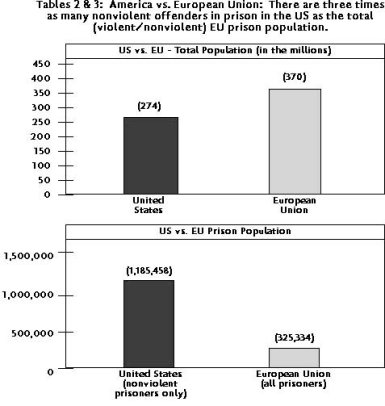
Nonviolent prisoners increasing faster than violent prisoners in America

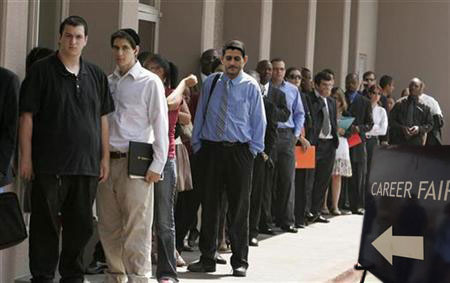
Federal Reserve Official Calls For Placing Limits On The Size Of Big Banks
 Federal Reserve Board Governor Daniel Tarullo called for placing limits on bank size in a speech yesterday, making him one of the highest ranking economic officials to propose a remedy to reduce big bank dominance of the economy. Tarullo said that, in order to keep big banks from growing so large that they threaten the entire financial system, they should be limited in size to a certain percentage of the overall economy:
The idea along these lines that seems to have the most promise would limit the non-deposit liabilities of financial firms to a specified percentage of U.S. gross domestic product, as calculated on a lagged, averaged basis. In addition to the virtue of simplicity, this approach has the advantage of tying the limitation on growth of financial firms to the growth of the national economy and its capacity to absorb losses, as well as to the extent of a firm’s dependence on funding from sources other than the stable base of deposits. While Section 622 of [the Dodd-Frank financial reform law] contains a financial sector concentration limit, it is based on a somewhat awkward and potentially shifting metric of the aggregated consolidated liabilities of all “financial companies.”
Tarullo also said that “the Fed should block any merger or acquisition this group of big banks attempts to make,” which it is allowed to do under Dodd-Frank.
Last month, former Bank of America executive Sallie Krawcheck said that the complexity of today’s Wall Street banks “makes you weep blood out of your eyes.“ She joined a parade of former Wall Street bankers calling for limiting the size and systemic importance of the nation’s biggest financial firms. Even former Citigroup CEO Sandy Weill, who is credited with creating the superbank, said, “What we should probably do is go and split up investment banking from banking, have banks be deposit takers, have banks make commercial loans and real estate loans, have banks do something that’s not going to risk the taxpayer dollars, that’s not too big to fail.”
Federal Reserve Official Calls For Placing Limits On The Size Of Big Banks
Researchers create an animal entirely from stem cells
Biotechnology is getting into some pretty interesting territory these days. The latest breakthrough comes from Kyoto University where research scientists have, for the first time, created a mouse by using eggs and sperm produced by stem cells alone. The achievement once again shows the remarkable possibilities presented by regenerative technologies like stem cells — but also the unsettling potential for human births in which parents might not be required.
Back in 2011, the same scientists, a team led by Mitinori Saitou, produced healthy mouse pups by using sperm derived from mouse stem cells. But if that wasn't remarkable enough, they have now shown that it's also possible to produce viable eggs with stem cells, too. And if just to prove a point, they used their stem cell-derived sperm to fertilize the stem cell-derived eggs to create baby mice.
Making eggs
To do so, they used mouse embryonic stem cells (ES) and induced pluripotent stem cells (iPS). These cells are undifferentiated — they are simply waiting for an indication as to what type of functional cell they should transform into. Prior to this breakthrough, however, scientists had a hard time creating germ cells (an embryonic cell with the potential of developing into a gamete). This has to do with the way that germ cells divide, namely through meiosis in which cells contain a single copy of each chromosome.
To overcome this problem, Saitou took the ES and iPS cells and cultured them into a mix of proteins to produce primordial germ cells, what they hoped would eventually turn into an oocyte. Following that, they mixed the proto-oocytes (what the researchers call primordial germ cell-like cells (PGCLCs)) with fetal ovarian cells, and scaffolded the structure by grafting them onto the natural ovaries within live mice.
A month later, the proto-oocytes had turned into proper oocytes, which were in turn fertilized in a petri dish with the stem cell-derived mouse sperm. The embryos were then implanted into a surrogate mother. The resulting pups turned out to be healthy — and in fact, they grew up to be fertile themselves.
Making human eggs
Moving forward, Saitou's group is trying to make the primordial cells from human tissue. It's thought that creating human sperm and eggs from embryonic stem cells will help scientists to better understand the reproductive process.
It's also thought that the technique could help both men and women who experience fertility problems. This could offer a way for prospective parents to have biological children that are derived from their own stem cells. It could also allow women to have babies later in life, or for women who cannot get pregnant due to cancer treatments.
More conceptually, the breakthrough suggests that human babies might someday be born from tissue samples and cell lines alone — with no direct parent involved. There are clearly a host of ethical implications that need to be addressed before any of this can be allowed to happen.

