

Charges against William Bryan Jennings, the former Morgan Stanley (MS) U.S. bond-underwriting chief accused of stabbing a New York cab driver over a fare, will be dropped, police said.
“I’m aware that the charges are being dropped,” Detective Chester Perkowski of the Darien,Connecticut, police department said today in an interview. He declined to comment further.
William Bryan Jennings, Morgan Stanley’s U.S. bond-underwriting chief in the U.S., is shown in this undated photo provided to the media by the Darien, Connecticut police department on March 4, 2012. Source: Darien Police Department via Bloomberg
Jennings was accused of attacking the driver, Mohamed Ammar, on Dec. 22 with a 2 1/2-inch blade after a 40-mile (64 kilometer) ride from New York to the banker’s $3.4 million home in Darien. Ammar, a native of Egypt and a U.S. citizen, said Jennings told him, “I’m going to kill you. You should go back to your country,” according to a police report.
Jennings faced assault and hate-crime charges, each of which brings a maximum sentence of five years in prison. He was also charged with not paying the fare, a misdemeanor. He pleaded not guilty March 9.
Eugene Riccio, Jennings’s attorney, wouldn’t confirm that the case had been abandoned.
“All I’m saying is we’re showing up,” he said today in a phone interview. “We have a court date Monday, and we’re going to be there.”


Nonviolent prisoners increasing faster than violent prisoners in America
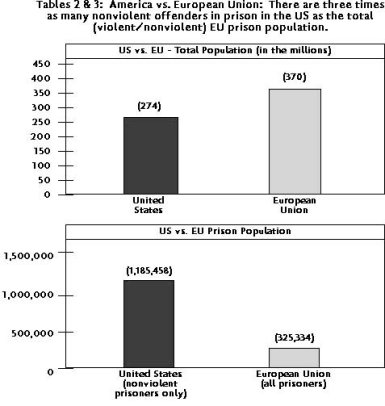
Coming just a week after the Justice Department announced that 1.8 million Americans were behind bars, a new report by the Justice Policy Institute has found that, for the first time, over one million nonviolent offenders were incarcerated in America in 1998.
"Prisons are built and mandatory sentencing laws passed on the specter of Willie Horton," stated Vincent Schiraldi, the Institute's Director; "But increasingly, those prisons are filled with the 'gang that couldn't shoot straight'."
Entitled America's One Million Nonviolent Prisoners, the JPI analysis of recent United States Justice Department data showed that over the past 20 years, the nonviolent prisoner population has increased at a rate much faster than the violent prisoner population, and that 77% of the people entering prisons and jails were sentenced for nonviolent offenses. Since 1978, the number of violent prisoners entering America's prisons doubled, the number of nonviolent prisoners tripled, and the number of persons imprisoned for drug offenses increased eight-fold.
The report, co-authored by John Irwin, professor emeritus from San Francisco State University, and Jason Ziedenberg, JPI Policy Analyst, also catalogued the tremendous costs of imprisoning over a million nonviolent offenders. The $24 billion spent last year by federal, state and local units of government to incarcerate 1.2 million nonviolent offenders was almost 50% larger than the entire federal welfare budget ($16.6 billion) which provides income supports for 8.5 million people, and represents six times what the federal government will spend on child care for 1.25 million children. Further, America is spending more building prisons ($2.6 billion) than universities ($2.5 billion). Overall, the combined expenditures for America's prisons and jails have increased from $5 billion in 1978 to $31 billion in 1997.
"Spending more to lock up nonviolent offenders than to feed or educate our country's children is a cruel, self-fulfilling prophecy," stated JPI Policy Analyst Jason Ziedenberg. "It's not just bad public policy, but it's downright mean-spirited."
The study also found that the overwhelming majority of male jail inmates are not incarcerated for a violent offense (82.4%) and have no violent offense history (64%). That is even truer for America's fastest growing inmate populationwomen. Eighty-five percent of female jail inmates are incarcerated for a nonviolent offense, and 83.1% of female jail inmates have no violent prior offenses. The research corroborated the findings of other studies which have found that African Americans are imprisoned at 8 times the rate of whites, and Hispanics are imprisoned at 3 times the rate of whites. In the 1930s, 75% of the people entering prison were white (reflecting the general demographics of the nation). Today, minority communities represent 70% of all new prison admissions.

Federal Reserve Official Calls For Placing Limits On The Size Of Big Banks
 Federal Reserve Board Governor Daniel Tarullo called for placing limits on bank size in a speech yesterday, making him one of the highest ranking economic officials to propose a remedy to reduce big bank dominance of the economy. Tarullo said that, in order to keep big banks from growing so large that they threaten the entire financial system, they should be limited in size to a certain percentage of the overall economy:
The idea along these lines that seems to have the most promise would limit the non-deposit liabilities of financial firms to a specified percentage of U.S. gross domestic product, as calculated on a lagged, averaged basis. In addition to the virtue of simplicity, this approach has the advantage of tying the limitation on growth of financial firms to the growth of the national economy and its capacity to absorb losses, as well as to the extent of a firm’s dependence on funding from sources other than the stable base of deposits. While Section 622 of [the Dodd-Frank financial reform law] contains a financial sector concentration limit, it is based on a somewhat awkward and potentially shifting metric of the aggregated consolidated liabilities of all “financial companies.”
Tarullo also said that “the Fed should block any merger or acquisition this group of big banks attempts to make,” which it is allowed to do under Dodd-Frank.
Last month, former Bank of America executive Sallie Krawcheck said that the complexity of today’s Wall Street banks “makes you weep blood out of your eyes.“ She joined a parade of former Wall Street bankers calling for limiting the size and systemic importance of the nation’s biggest financial firms. Even former Citigroup CEO Sandy Weill, who is credited with creating the superbank, said, “What we should probably do is go and split up investment banking from banking, have banks be deposit takers, have banks make commercial loans and real estate loans, have banks do something that’s not going to risk the taxpayer dollars, that’s not too big to fail.”
Researchers create an animal entirely from stem cells
Biotechnology is getting into some pretty interesting territory these days. The latest breakthrough comes from Kyoto University where research scientists have, for the first time, created a mouse by using eggs and sperm produced by stem cells alone. The achievement once again shows the remarkable possibilities presented by regenerative technologies like stem cells — but also the unsettling potential for human births in which parents might not be required.
Back in 2011, the same scientists, a team led by Mitinori Saitou, produced healthy mouse pups by using sperm derived from mouse stem cells. But if that wasn't remarkable enough, they have now shown that it's also possible to produce viable eggs with stem cells, too. And if just to prove a point, they used their stem cell-derived sperm to fertilize the stem cell-derived eggs to create baby mice.
Making eggs
To do so, they used mouse embryonic stem cells (ES) and induced pluripotent stem cells (iPS). These cells are undifferentiated — they are simply waiting for an indication as to what type of functional cell they should transform into. Prior to this breakthrough, however, scientists had a hard time creating germ cells (an embryonic cell with the potential of developing into a gamete). This has to do with the way that germ cells divide, namely through meiosis in which cells contain a single copy of each chromosome.
To overcome this problem, Saitou took the ES and iPS cells and cultured them into a mix of proteins to produce primordial germ cells, what they hoped would eventually turn into an oocyte. Following that, they mixed the proto-oocytes (what the researchers call primordial germ cell-like cells (PGCLCs)) with fetal ovarian cells, and scaffolded the structure by grafting them onto the natural ovaries within live mice.
A month later, the proto-oocytes had turned into proper oocytes, which were in turn fertilized in a petri dish with the stem cell-derived mouse sperm. The embryos were then implanted into a surrogate mother. The resulting pups turned out to be healthy — and in fact, they grew up to be fertile themselves.
Making human eggs
Moving forward, Saitou's group is trying to make the primordial cells from human tissue. It's thought that creating human sperm and eggs from embryonic stem cells will help scientists to better understand the reproductive process.
It's also thought that the technique could help both men and women who experience fertility problems. This could offer a way for prospective parents to have biological children that are derived from their own stem cells. It could also allow women to have babies later in life, or for women who cannot get pregnant due to cancer treatments.
More conceptually, the breakthrough suggests that human babies might someday be born from tissue samples and cell lines alone — with no direct parent involved. There are clearly a host of ethical implications that need to be addressed before any of this can be allowed to happen.
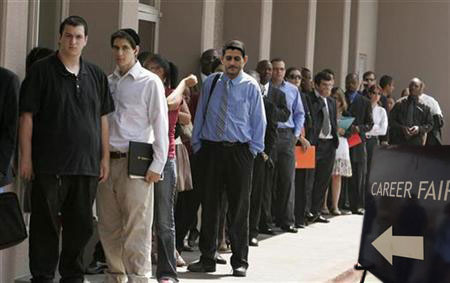
 Do you need a good job? If so, there are millions of other Americans that are just like you. Unfortunately, most of the jobs that are available in America today are either part-time jobs, temp jobs or are "independent contractor" jobs. The "full-time job with benefits" is a dying breed. There are so many desperate unemployed workers in America today that companies don't have to roll out the red carpet anymore. Instead, they can just hire a horde of inexpensive part-timers and temps that they don't have to give any benefits to. But isn't the employment situation supposed to be getting better? No, it really is not. Yes, the U.S. economy added 216,000 jobs in March. However, the truth is that approximately 290,000 part-time jobs were created and about 80,000 full-time jobs were actually lost. This is all part of a long-term trend in America. Good jobs are rapidly disappearing and they are being replaced by low paying service jobs that do not pay a living wage. In many American households today, both parents have multiple jobs. Yet a large percentage of those same households can't even pay the mortgage and are drowning in debt.
Whenever a new government jobs report comes out from now on, try to find out how many of the jobs that were created were actually part-time jobs. Most Americans that only have part-time jobs are living around or below the poverty line. The truth is that it is really hard to get by if you are only making a couple hundred bucks a week.
As mentioned above, the U.S. economy added 216,000 jobs last month. The Obama administration and the mainstream media heralded that figure as evidence that the U.S. economy is recovering nicely.
But is that really accurate?
Rebel Cole, a professor at DePaul University's Kellstadt Graduate School of Business, says that when you take the time to do a closer examination of the employment numbers they don't look so good....
"If you look deeper in the report, there were 290,000 new part-time workers, which means that there were 80,000 fewer full-time workers, that's not a good sign. Things are getting worse, not getting better."
Unless you are a teen or a college student or a retired person, most likely you would prefer to be working a full-time job. Most people do not actually have the goal of working part-time. Most part-time jobs pay very poorly and offer very few benefits.
Unfortunately, that is why so many big companies like part-time workers and temp workers. There are so many more rules, regulations and laws that pertain to full-time workers.
Hiring a bunch of part-time workers is so much easier and so much cheaper. Without a doubt it is definitely more profitable in most situations.
Today, there are millions of Americans that have part-time jobs that would love to have full-time jobs. In fact, the government says that there are about 8 million Americans that are currently working part-time jobs for "economic reasons".
One such worker named "John" recently left a comment on another article I did entitled "How To Find A Job: Just Be Willing To Flip Burgers And Work For Minimum Wage". John says that the restaurant chain that he works for has implemented a "part-time only policy"....
“Could your family survive on $505 a week?”
If only I could make HALF that much! The dirty secret is McDonalds needs to add 50,000 workers to increase the headcount in every store. The goal is to have no full-time employees who qualify for health benefits. So these 50,000 jobs will pay $174 a week BEFORE taxes, and have no benefits, no vacation days, no holidays off, call in sick and get fired, but they will have 52 mandatory weekends each year.
And how do I know this? I work for a national restaurant chain that already has gone to a part-time only policy. I am scheduled for 23 hours next week. The threshold for benefits is 26 hrs.
Of course I would assume that there are perhaps a couple of full-time workers at the restaurant that John works at (such as the manager). But the reality is that we are seeing this kind of thing more and more around the nation. Companies are being careful to keep hours low enough so that the majority of their employees do not qualify for expensive "full-time benefits".
Another commenter on that same article said that it is possible to get by on a low wage but that doesn't mean that it is easy....
I make about $400 a week; my wife nothing. Rent is $500 a month. Credit card bills (run up back when I made about $1200/week) run about $200 a month. Other expenses run us another few hundred dollars. We quit tv. We’re a litte cold. We eat ok. Try to fill the gas tank just once a month. We’re getting by, but able to save nothing, nor do we go out and have fun. Well, fun has become walks on Saturday morning. Those are free. And, as we’ve learned, rather nice.
$10 an hour stinks, but it is livable if you don’t mind admitting that you are poor. I know I’m poor now. It’s just the way it is. If I tried to keep living as i did when I was a middle class manager, I’d be extremely unhappy. I cant say I’m happy about being poor, but my wife and i are finding that happiness isn’t about having “stuff.”
This is the new "American Dream" for millions of American families. They are learning to scratch and claw to get by on what they have.
As I have written about previously, the standard of living of the middle class is being pushed down to third world levels. We have been merged into a "global labor pool", and what that means is that the standard of living of all workers all over the world is going to be slowly equalized over time.
Translation: your standard of living and the standard of living of virtually everyone that you know is slated to go way down.
Right now America is rapidly losing high paying jobs and they are being replaced by low paying jobs. According to a recent report from the National Employment Law Project, higher wage industries accounted for 40 percent of the job losses over the past 12 months but only 14 percent of the job growth. Lower wage industries accounted for just 23 percent of the job losses over the past 12 months and a whopping 49 percent of the job growth.
So yes, jobs are being created, but most of them are jobs that none of us would really want under normal circumstances.
Unfortunately, times are not normal and millions of desperate people are having to take whatever they can get.
What makes things even worse is that really bad inflation is coming. There are less good jobs for American families and at the same time the cost of basic necessities is going up.
Have you been to the gas pump lately?
As I wrote about yesterday, the average price of a gallon of gasoline in the United States is now $3.70.
A year ago it was just $2.83.
For average American families on a tight budget that is a huge difference.
Food inflation is already here as well.
During the month of February, the price of food in the U.S. increased at the fastest rate in 36 years.
Are you starting to understand why so many American families are feeling squeezed right now?
Times are tough and they are going to get tougher. If you still have a good full-time job you should be very thankful, because there are millions and millions of people that would love to trade places with you.
So do the rest of you believe that America is turning into "the land of the part-time job"? Please feel free to leave a comment with your opinion below....
America's Transition To A Part-Time Worker Society Accelerates As Part-Time Jobs Hit Record
Back in December 2010 Zero Hedge was the first to point out what is easily the most troubling characteristic within America's evaporating labor force: its gradual transition to a part-time worker society. We elaborated on this back in February when we noted that the quality assessment of US jobs indicates that this most disturbing trend is accelerating. Finally, yesterday, the BLS' latest jobs report confirmed that our concerns have been valid all along: as of May, part-time jobs just as disclosed by the Bureau of Labor Statistics hit an all time high, over 28 million! These are people who traditionally have zero job benefits, including healthcare and retirement, and which according to the BLS "work less than 35 hours per week." In other words, as little as one hour per week of "work" is enough to classify one a part-time worker. More disturbing: the increase in part-time jobs in May compared to April: 618,000, or the fifth highest on record. It gets better: when added with the 508,000 increase in part-time jobs in April, this is the largest two month increase in part time-jobs in history. Which means of course that full time jobs in May must have declined: sure enough, at a -266,000 drop in full time jobs, the quality composition of the NFP report was just abysmal and makes any reported "increase" in those employed into a sad farce.
Part-time jobs:

Full-time jobs:

And the punchline: Part-time vs Full-time jobs:

Source: BLS
The chart above hardly needs further clarification: since the December 2007 start of the depression, full time jobs have declined by 6.9 million while part-time jobs have increased by 3.1 million.

 FUTURE PRIMATE