President Bill Clinton shares his view on Mitt Romney's performance in the first Presidential debate.
Romney Strives to Stand Apart in Global Policy
Mitt Romney intensified his efforts Monday to draw a sharp contrast with President Obama on national security in the presidential campaign’s closing stages, portraying Mr. Obama as having mishandled the tumult in the Arab world and having left the nation exposed to a terrorist attack in Libya.
In a speech he gave at the Virginia Military Institute, Mr. Romney declared that “hope is not a strategy” for dealing with the rise of Islamist governments in the Middle East or an Iran racing toward the capability to build a nuclear weapon, according to excerpts released by his campaign.
The essence of Mr. Romney’s argument is that he would take the United States back to an earlier era, one that would result, as his young foreign policy director, Alex Wong, told reporters on Sunday, in “the restoration of a strategy that served us well for 70 years.”
But beyond his critique of Mr. Obama as failing to project American strength abroad, Mr. Romney has yet to fill in many of the details of how he would conduct policy toward the rest of the world, or to resolve deep ideological rifts within the Republican Party and his own foreign policy team. It is a disparate and politely fractious team of advisers that includes warring tribes of neoconservatives, traditional strong-defense conservatives and a band of self-described “realists” who believe there are limits to the degree the United States can impose its will.
Each group is vying to shape Mr. Romney’s views, usually through policy papers that many of the advisers wonder if he is reading. Indeed, in a campaign that has been so intensely focused on economic issues, some of these advisers, in interviews over the past two weeks in which most insisted on anonymity, say they have engaged with him so little on issues of national security that they are uncertain what camp he would fall into, and are uncertain themselves about how he would govern.
“Would he take the lead in bombing Iran if the mullahs were getting too close to a bomb, or just back up the Israelis?” one of his senior advisers asked last week. “Would he push for peace with the Palestinians, or just live with the status quo? He’s left himself a lot of wiggle room.”
In his remarks, Mr. Romney addressed the Palestinian issue, saying, “I will recommit America to the goal of a democratic, prosperous Palestinian state living side by side in peace and security with the Jewish state of Israel.” And he faulted Mr. Obama for failing to deliver on that front.
But while the theme Mr. Romney hit the hardest in his speech at V.M.I. — that the Obama era has been one marked by “weakness” and the abandonment of allies — has political appeal, the specific descriptions of what Mr. Romney would do, on issues like drawing red lines forIran’s nuclear program and threatening to cut off military aid to difficult allies like Pakistan or Egypt if they veer away from American interests, sound at times quite close to Mr. Obama’s approach.
And the speech appeared to glide past positions Mr. Romney himself took more than a year ago, when he voiced opposition to expanding the intervention in Libya to hunt down Col. Muammar el-Qaddafi with what he termed insufficient resources. He called it “mission creep and mission muddle,” though within months Mr. Qaddafi was gone. And last spring, Mr. Romney was caught on tape telling donors he believed there was “just no way” a two-state solution to the Israeli-Palestinian conflict could work.
Mr. Romney’s Monday speech called vaguely for support of Libya’s “efforts to forge a lasting government” and to pursue the “terrorists who attacked our consulate in Benghazi and killed Americans.” And he said he would “recommit America to the goal of a democratic, prosperous Palestinian state living side by side in peace and security” with Israel. But he did not say what resources he would devote to those tasks.
Romney Strives to Stand Apart in Global Policy
Terreform propose an alternative masterplan of New York
Cities are in crisis. The global urban population is growing at the rate of one million people every week. The characteristic response to this has been the hydra of megacities and sprawl, forms that have already fallen over the edge of apraxia, dysfunctional both physically and socially.
New York City (Steady) State (NYCSS) proposes an alternative masterplan for the city, predicated on the idea that it is possible for the city to become completely self-sufficient, its ecological footprint co-terminus with its political boundaries. NYCSS examines the outer limits of the autarkic city, focusing on food, waste, energy, movement, manufacture, building, water, air and climate as defining systems that will, in turn, yield the anatomical diagram of self-reliance. Based on a rigorous process of research and analysis, NYCSS has made a series of calculations on both the demand and the supply of various functions of the city, and investigated a series of formal solutions that begin at the margin and attempt to harmonize autonomy and rationality.
NYCSS relies on the tenets of sustainability to guide its course, but unlike similar projects, demonstrates how this conceptual structure, balancing environment, economy and equity, manifests physically in practice. It is the mission of NYCSS to inform policy-makers and the citizenry of the unique opportunities that alternative architectural typologies, urban forms, and political-economic frameworks can have on city life.
Terreform propose an alternative masterplan of New York

A Changed Court Revisits Affirmative Action in College Admissions
When the court hears a new challenge on Wednesday, the decisive vote will almost certainly be that of the court’s current swing member, Justice Anthony M. Kennedy. But Justice Kennedy dissented in the 2003 decision, Grutter v. Bollinger, and he has never voted to uphold an affirmative action program. There is thus reason to think the earlier decision is in peril.
The parties in the new case, Fisher v. University of Texas, No. 11-345, certainly seem to believe they must have Justice Kennedy’s vote to win. They each cited him by name about 20 times in their main briefs.
Justice O’Connor, who retired in 2006, wrote in the Grutter decision in 2003 that she expected it to stand for 25 years. Changes in the court’s personnel since then, notably her replacement by Justice Samuel A. Alito Jr., may speed up that timetable.
The new case was brought by Abigail Fisher, a white woman who said she had been denied admission to the University of Texas on account of her race. Ms. Fisher, 22, recently graduated from Louisiana State University and works as a financial analyst in Austin, Tex.
In their brief, Ms. Fisher’s lawyers reminded Justice Kennedy of his discomfort with the very ideas of racial preferences. “Preferment by race, when resorted to by the state,” they wrote, quotingJustice Kennedy’s dissent in Grutter, “can be the most divisive of all policies, containing within it the potential to destroy confidence in the Constitution and in the idea of equality.”
In its own brief, the university said that Justice Kennedy had left himself plenty of room to rule in its favor.
“U.T.’s policy lacks the features that Justice Kennedy found disqualifying in Grutter,” the university’s lawyers wrote. “It is undisputed that U.T. has not established any race-based target; race is not assigned any automatic value; and the racial or ethnic composition of admits is not monitored during the admissions cycle.”
The university also cited Justice Kennedy’s 2007 concurrence in Parents Involved in Community Schools v. Seattle School District No. 1, which limited the ability of public school districts to take race into account in assigning students to schools to achieve integration. The concurrence, which agreed that the plans at issue were unconstitutional, nonetheless revealed a fault line between Justice Kennedy and his four more conservative colleagues.
Justice Kennedy wrote that Chief Justice John G. Roberts Jr.’s opinion for four justices suffered from an “all-too-unyielding insistence that race cannot be a factor in instances when, in my view, it may be taken into account.”
Chief Justice Roberts, who has been intensely skeptical of government programs that classify people by race, wrote in the 2007 decision that “racial balancing is not transformed from ‘patently unconstitutional’ to a compelling state interest simply by relabeling it ‘racial diversity.’ ”
Justice Kennedy responded that the government had an interest in “avoiding racial isolation” and addressing “the problem of de facto resegregation in schooling.”
“Diversity, depending on its meaning and definition, is a compelling educational goal,” he wrote. Perhaps most important, Justice Kennedy wrote, in a passage featured in the university’s brief, “First Amendment interests give universities particular latitude in defining diversity.”
Trying to predict how Justice Kennedy will vote in the new case is complicated by the idiosyncrasies of the University of Texas’ admissions system. Three-quarters of applicants from Texas are admitted under a program that guarantees admission to the top students in every high school in the state. That program is not directly at issue in the case.
Students from Texas who missed the cutoff, like Ms. Fisher, and those from elsewhere are considered under standards that take account of academic achievement and other factors, including race and ethnicity. The case concerns that second aspect of the admissions program.
The Supreme Court has four basic options. It could decline to decide the central issue in the case at all if it credits the university’s argument that Ms. Fisher did not suffer the sort of injury that gives a plaintiff standing to sue.
It could uphold the Texas program as constitutional. It could say that race-conscious admissions may not be used where race-neutral ones, like the one used to select the bulk of the class in Texas, have produced substantial diversity.
Or it could overrule Grutter and say race may not be used in admissions decisions at all.
A decision forbidding the use of race at public universities would almost certainly mean that it would be barred at most private ones as well under Title VI of the Civil Rights Act of 1964, which forbids racial discrimination in programs that receive federal money.
There is one additional complication. Justice Elena Kagan has disqualified herself, presumably because she had worked on the case as solicitor general. That leaves open the possibility of a 4-to-4 tie, which would have the effect of affirming a lower-court decision upholding the Texas program.
A Changed Court Revisits Affirmative Action in College Admissions

The conservative movement is suffering from borderline personality disorder otherwise known as Emotional Dysregulation Disorder. Let’s consider for a moment that the conservative movement is the personification of the modern day Dr. Jekyll and Mr. Hyde.
The conservative Mr. Hyde constantly talks about the need for “smaller government” to “reduce government”. He wants a government small enough that he can drown it in a bathtub but just large enough to investigate women’s vaginas (a big preoccupation of Mr. Hyde when he’s not trying to blame gays, muslims and latinos for all the country’s ills.) Slash government services like Medicaid, food stamps, worker retraining and unemployment. Get rid of funding for Planned Parenthood and PBS. Privatize government programs like Medicare and Social Security. Lower tax cuts for the rich because they are the job creators. Eliminate and reduce government employees who are a drain on the economy because they only cost taxpayers money. The conservative Mr. Hyde simply can not be controlled and will not negotiate with anyone … country be damned.
The conservative Dr. Jekyll has big dreams for America. Even though America already spends more than the top 14 countries in the world combined (source), he would like to increase defense spending by an additional 25%. He is a revolutionary thinker who knows that America can afford this increase in government spending; in his eyes – America can’t afford NOT TO increase spending on defense. No matter what it costs … he knows its worth it and the American people will be better off for it. Any attempt to reduce defense spending would be anathema … unpatriotic …. weak … misguided.
Read more: http://www.classwarfareexists.com/58-of-all-federal-government-employees-are-defense-related-who-wants-smaller-government/#ixzz28sAME5Is
Follow us: classwarfareexists on Facebook
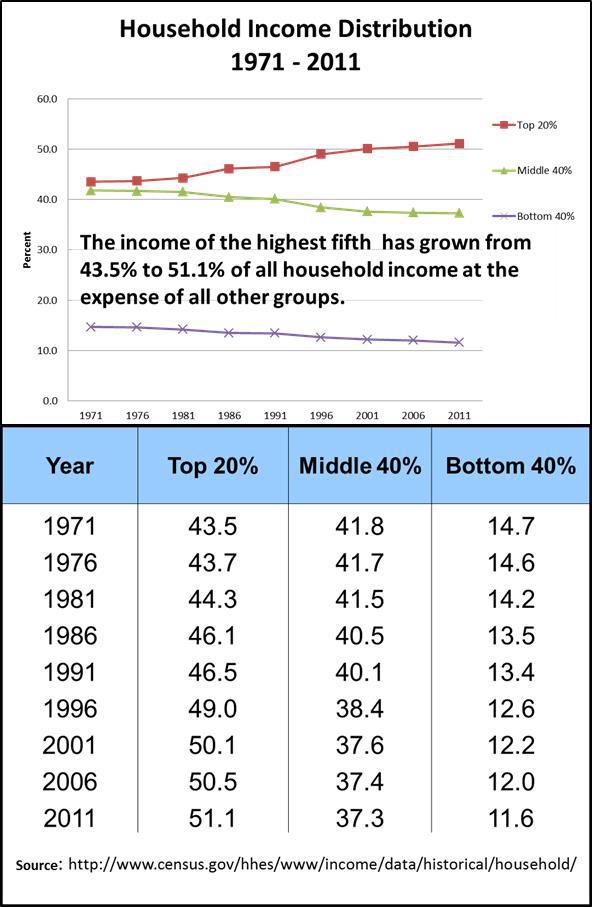
58% OF ALL FEDERAL GOVERNMENT EMPLOYEES ARE DEFENSE RELATED; WHO WANTS SMALLER GOVERNMENT?
Bendable Microchips Could Make Smarter Sensors

The Belgian semiconductor research centerIMEC has developed a way to put integrated circuits into flexible and stretchable materials without impairing the microchip's functionality. The technique could lead to more sophisticated biomedical implants or electronics embedded in clothing.
Flexible electronics usually consist of circuits made up of individual components embedded in an elastic material and connected together by stretchable interconnects. This approach can create basic circuits capable of, for example, simple sensing functions.
Jan Vanfleteren, an electrical engineer at the Interuniversity Micro Electronics Centre at the University of Ghent, in Belgium, has developed a new approach. It involves "thinning" an off-the-shelf microchip from 725 micrometers down to just 30 micrometers using a conventional grinding process. Vanfleteren says the process does not impair the performance of the microchip.
The chips are processed while still on the wafer from which they are cut, embedded within a thin substrate, and then connected to other components embedded within the plastic via a stretchable copper interconnect.
Vanfleteren presented a prototype flexible microcontroller at the Electronics and System Integration Technology Conference in Amsterdam last month. It can be stretched beyond 50 percent of its length (20 percent is sufficient for a biomedical device), and can be flexed 10,000 to 100,000 times before breaking. It is even machine washable, Vanfleteren notes, making it suitable for clothing.
Making the chip so thin makes it bendable, says Vanfleteren, but the material is still too brittle be stretched—it's the S-shaped copper interconnects that allow the entire embedded device to be stretched and deformed.
Vanfleteren says flexible medical implants containing these circuits could, for example, monitor and respond to physiological changes rather than having to send data to an external computing unit, he says.
Other researchers, including John Rogers at the University of Illinois, Urbana-Champaign, are developing flexible electronics. Rogers' technology has been spun out into a Cambridge, Massachusetts-based company called MC10. But existing approaches involve connecting individual components rather than using a premade chip.
Rogers says using off-the-shelf computer chips should make it easier to build more sophisticated devices. "A key advantage is that these strategies enable commercial, off-the-shelf components to be configured into flexible, stretchable formats," he says.
Stéphanie Lacour, head of the Laboratory for Soft Bioelectronic Interfaces at the Ecole Polytechnique Fédérale de Lausanne, in Switzerland, says the IMEC approach will make it easier to mass-produce flexible electronics because it's compatible with conventional fabrication methods. "What's interesting about this approach is that they have managed to use conventional materials and electronics," she says.
 FUTURE PRIMATE