
Federal Reserve Official Calls For Placing Limits On The Size Of Big Banks
 Federal Reserve Board Governor Daniel Tarullo called for placing limits on bank size in a speech yesterday, making him one of the highest ranking economic officials to propose a remedy to reduce big bank dominance of the economy. Tarullo said that, in order to keep big banks from growing so large that they threaten the entire financial system, they should be limited in size to a certain percentage of the overall economy:
The idea along these lines that seems to have the most promise would limit the non-deposit liabilities of financial firms to a specified percentage of U.S. gross domestic product, as calculated on a lagged, averaged basis. In addition to the virtue of simplicity, this approach has the advantage of tying the limitation on growth of financial firms to the growth of the national economy and its capacity to absorb losses, as well as to the extent of a firm’s dependence on funding from sources other than the stable base of deposits. While Section 622 of [the Dodd-Frank financial reform law] contains a financial sector concentration limit, it is based on a somewhat awkward and potentially shifting metric of the aggregated consolidated liabilities of all “financial companies.”
Tarullo also said that “the Fed should block any merger or acquisition this group of big banks attempts to make,” which it is allowed to do under Dodd-Frank.
Last month, former Bank of America executive Sallie Krawcheck said that the complexity of today’s Wall Street banks “makes you weep blood out of your eyes.“ She joined a parade of former Wall Street bankers calling for limiting the size and systemic importance of the nation’s biggest financial firms. Even former Citigroup CEO Sandy Weill, who is credited with creating the superbank, said, “What we should probably do is go and split up investment banking from banking, have banks be deposit takers, have banks make commercial loans and real estate loans, have banks do something that’s not going to risk the taxpayer dollars, that’s not too big to fail.”
Researchers create an animal entirely from stem cells
Biotechnology is getting into some pretty interesting territory these days. The latest breakthrough comes from Kyoto University where research scientists have, for the first time, created a mouse by using eggs and sperm produced by stem cells alone. The achievement once again shows the remarkable possibilities presented by regenerative technologies like stem cells — but also the unsettling potential for human births in which parents might not be required.
Back in 2011, the same scientists, a team led by Mitinori Saitou, produced healthy mouse pups by using sperm derived from mouse stem cells. But if that wasn't remarkable enough, they have now shown that it's also possible to produce viable eggs with stem cells, too. And if just to prove a point, they used their stem cell-derived sperm to fertilize the stem cell-derived eggs to create baby mice.
Making eggs
To do so, they used mouse embryonic stem cells (ES) and induced pluripotent stem cells (iPS). These cells are undifferentiated — they are simply waiting for an indication as to what type of functional cell they should transform into. Prior to this breakthrough, however, scientists had a hard time creating germ cells (an embryonic cell with the potential of developing into a gamete). This has to do with the way that germ cells divide, namely through meiosis in which cells contain a single copy of each chromosome.
To overcome this problem, Saitou took the ES and iPS cells and cultured them into a mix of proteins to produce primordial germ cells, what they hoped would eventually turn into an oocyte. Following that, they mixed the proto-oocytes (what the researchers call primordial germ cell-like cells (PGCLCs)) with fetal ovarian cells, and scaffolded the structure by grafting them onto the natural ovaries within live mice.
A month later, the proto-oocytes had turned into proper oocytes, which were in turn fertilized in a petri dish with the stem cell-derived mouse sperm. The embryos were then implanted into a surrogate mother. The resulting pups turned out to be healthy — and in fact, they grew up to be fertile themselves.
Making human eggs
Moving forward, Saitou's group is trying to make the primordial cells from human tissue. It's thought that creating human sperm and eggs from embryonic stem cells will help scientists to better understand the reproductive process.
It's also thought that the technique could help both men and women who experience fertility problems. This could offer a way for prospective parents to have biological children that are derived from their own stem cells. It could also allow women to have babies later in life, or for women who cannot get pregnant due to cancer treatments.
More conceptually, the breakthrough suggests that human babies might someday be born from tissue samples and cell lines alone — with no direct parent involved. There are clearly a host of ethical implications that need to be addressed before any of this can be allowed to happen.
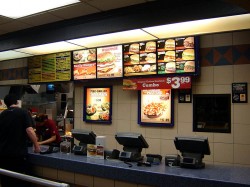 Do you need a good job? If so, there are millions of other Americans that are just like you. Unfortunately, most of the jobs that are available in America today are either part-time jobs, temp jobs or are "independent contractor" jobs. The "full-time job with benefits" is a dying breed. There are so many desperate unemployed workers in America today that companies don't have to roll out the red carpet anymore. Instead, they can just hire a horde of inexpensive part-timers and temps that they don't have to give any benefits to. But isn't the employment situation supposed to be getting better? No, it really is not. Yes, the U.S. economy added 216,000 jobs in March. However, the truth is that approximately 290,000 part-time jobs were created and about 80,000 full-time jobs were actually lost. This is all part of a long-term trend in America. Good jobs are rapidly disappearing and they are being replaced by low paying service jobs that do not pay a living wage. In many American households today, both parents have multiple jobs. Yet a large percentage of those same households can't even pay the mortgage and are drowning in debt.
Whenever a new government jobs report comes out from now on, try to find out how many of the jobs that were created were actually part-time jobs. Most Americans that only have part-time jobs are living around or below the poverty line. The truth is that it is really hard to get by if you are only making a couple hundred bucks a week.
As mentioned above, the U.S. economy added 216,000 jobs last month. The Obama administration and the mainstream media heralded that figure as evidence that the U.S. economy is recovering nicely.
But is that really accurate?
Rebel Cole, a professor at DePaul University's Kellstadt Graduate School of Business, says that when you take the time to do a closer examination of the employment numbers they don't look so good....
"If you look deeper in the report, there were 290,000 new part-time workers, which means that there were 80,000 fewer full-time workers, that's not a good sign. Things are getting worse, not getting better."
Unless you are a teen or a college student or a retired person, most likely you would prefer to be working a full-time job. Most people do not actually have the goal of working part-time. Most part-time jobs pay very poorly and offer very few benefits.
Unfortunately, that is why so many big companies like part-time workers and temp workers. There are so many more rules, regulations and laws that pertain to full-time workers.
Hiring a bunch of part-time workers is so much easier and so much cheaper. Without a doubt it is definitely more profitable in most situations.
Today, there are millions of Americans that have part-time jobs that would love to have full-time jobs. In fact, the government says that there are about 8 million Americans that are currently working part-time jobs for "economic reasons".
One such worker named "John" recently left a comment on another article I did entitled "How To Find A Job: Just Be Willing To Flip Burgers And Work For Minimum Wage". John says that the restaurant chain that he works for has implemented a "part-time only policy"....
“Could your family survive on $505 a week?”
If only I could make HALF that much! The dirty secret is McDonalds needs to add 50,000 workers to increase the headcount in every store. The goal is to have no full-time employees who qualify for health benefits. So these 50,000 jobs will pay $174 a week BEFORE taxes, and have no benefits, no vacation days, no holidays off, call in sick and get fired, but they will have 52 mandatory weekends each year.
And how do I know this? I work for a national restaurant chain that already has gone to a part-time only policy. I am scheduled for 23 hours next week. The threshold for benefits is 26 hrs.
Of course I would assume that there are perhaps a couple of full-time workers at the restaurant that John works at (such as the manager). But the reality is that we are seeing this kind of thing more and more around the nation. Companies are being careful to keep hours low enough so that the majority of their employees do not qualify for expensive "full-time benefits".
Another commenter on that same article said that it is possible to get by on a low wage but that doesn't mean that it is easy....
I make about $400 a week; my wife nothing. Rent is $500 a month. Credit card bills (run up back when I made about $1200/week) run about $200 a month. Other expenses run us another few hundred dollars. We quit tv. We’re a litte cold. We eat ok. Try to fill the gas tank just once a month. We’re getting by, but able to save nothing, nor do we go out and have fun. Well, fun has become walks on Saturday morning. Those are free. And, as we’ve learned, rather nice.
$10 an hour stinks, but it is livable if you don’t mind admitting that you are poor. I know I’m poor now. It’s just the way it is. If I tried to keep living as i did when I was a middle class manager, I’d be extremely unhappy. I cant say I’m happy about being poor, but my wife and i are finding that happiness isn’t about having “stuff.”
This is the new "American Dream" for millions of American families. They are learning to scratch and claw to get by on what they have.
As I have written about previously, the standard of living of the middle class is being pushed down to third world levels. We have been merged into a "global labor pool", and what that means is that the standard of living of all workers all over the world is going to be slowly equalized over time.
Translation: your standard of living and the standard of living of virtually everyone that you know is slated to go way down.
Right now America is rapidly losing high paying jobs and they are being replaced by low paying jobs. According to a recent report from the National Employment Law Project, higher wage industries accounted for 40 percent of the job losses over the past 12 months but only 14 percent of the job growth. Lower wage industries accounted for just 23 percent of the job losses over the past 12 months and a whopping 49 percent of the job growth.
So yes, jobs are being created, but most of them are jobs that none of us would really want under normal circumstances.
Unfortunately, times are not normal and millions of desperate people are having to take whatever they can get.
What makes things even worse is that really bad inflation is coming. There are less good jobs for American families and at the same time the cost of basic necessities is going up.
Have you been to the gas pump lately?
As I wrote about yesterday, the average price of a gallon of gasoline in the United States is now $3.70.
A year ago it was just $2.83.
For average American families on a tight budget that is a huge difference.
Food inflation is already here as well.
During the month of February, the price of food in the U.S. increased at the fastest rate in 36 years.
Are you starting to understand why so many American families are feeling squeezed right now?
Times are tough and they are going to get tougher. If you still have a good full-time job you should be very thankful, because there are millions and millions of people that would love to trade places with you.
So do the rest of you believe that America is turning into "the land of the part-time job"? Please feel free to leave a comment with your opinion below....
America's Transition To A Part-Time Worker Society Accelerates As Part-Time Jobs Hit Record
Back in December 2010 Zero Hedge was the first to point out what is easily the most troubling characteristic within America's evaporating labor force: its gradual transition to a part-time worker society. We elaborated on this back in February when we noted that the quality assessment of US jobs indicates that this most disturbing trend is accelerating. Finally, yesterday, the BLS' latest jobs report confirmed that our concerns have been valid all along: as of May, part-time jobs just as disclosed by the Bureau of Labor Statistics hit an all time high, over 28 million! These are people who traditionally have zero job benefits, including healthcare and retirement, and which according to the BLS "work less than 35 hours per week." In other words, as little as one hour per week of "work" is enough to classify one a part-time worker. More disturbing: the increase in part-time jobs in May compared to April: 618,000, or the fifth highest on record. It gets better: when added with the 508,000 increase in part-time jobs in April, this is the largest two month increase in part time-jobs in history. Which means of course that full time jobs in May must have declined: sure enough, at a -266,000 drop in full time jobs, the quality composition of the NFP report was just abysmal and makes any reported "increase" in those employed into a sad farce.
Part-time jobs:

Full-time jobs:

And the punchline: Part-time vs Full-time jobs:

Source: BLS
The chart above hardly needs further clarification: since the December 2007 start of the depression, full time jobs have declined by 6.9 million while part-time jobs have increased by 3.1 million.
THE FUTURIST Magazine Releases Its Top 10 Forecasts for 2013 and Beyond Patrick Tucker
Each year since 1985, the editors of THE FUTURIST have selected the most thought-provoking ideas and forecasts appearing in the magazine to go into the annual Outlook report.

Over the years, Outlook has spotlighted the emergence of such epochal developments as the Internet, virtual reality, the 2008 financial crisis and the end of the Cold War. But these forecasts are meant as conversation starters, not absolute predictions about the future. We hope that this report—covering developments in business and economics, demography, energy, the environment, health and medicine, resources, society and values, and technology—inspires you to tackle the challenges, and seize the opportunities, of the coming decade.
With no further ado, THE FUTURIST Magazine releases its top ten forecasts for 2013 and beyond. Special Thanks to THE FUTURIST for allowing IEET to repost this article, which originally appeared HERE
1. Neuroscientists may soon be able to predict what you’ll do before you do it.
The intention to do something, such as grasp a cup, produces blood flow to specific areas of the brain, so studying blood-flow patterns through neuroimaging could give researchers a better idea of what people have in mind. One potential application is improved prosthetic devices that respond to signals from the brain more like actual limbs do, according to researchers at the University of Western Ontario. World Trends and Forecasts, Jan-Feb 2012, p. 10
2. Future cars will become producers of power rather than merely consumers.
A scheme envisioned at the Technology University of Delft would use fuel cells of parked electric vehicles to convert biogas or hydrogen into more electricity. And the owners would be paid for the energy their vehicles produce. Tomorrow in Brief, Mar-Apr 2012, p. 2

3. An aquaponic recycling system in every kitchen?
Future “farmers” may consist of householders recycling their food waste in their own aquariums. An aquaponic system being developed by SUNY ecological engineers would use leftover foods to feed a tank of tilapia or other fish, and then the fish waste would be used for growing vegetables. The goal is to reduce food waste and lower the cost of raising fish. Tomorrow in Brief, Nov-Dec 2011, p. 2
4. The economy may become increasingly jobless, but there will be plenty of work.
Many recently lost jobs may never come back. Rather than worry about unemployment, however, tomorrow’s workers will focus on developing a variety of skills that could keep them working productively and continuously, whether they have jobs or not. It’ll be about finding out what other people need done, and doing it, suggests financial advisor James H. Lee. “Hard at Work in the Jobless Future,” Mar-Apr 2012, pp. 32-33
5. The next space age will launch after 2020, driven by competition and “adventure capitalists.”
While the U.S. space shuttle program is put to rest, entrepreneurs like Paul Allen, Elon Musk, Richard Branson, and Jeff Bezos are planning commercial launches to access low-Earth orbit and to ferry passengers to transcontinental destinations within hours. Challenges include perfecting new technologies, developing global operations, building new infrastructure, and gaining regulatory approval. “The New Age of Space Business,” Sep-Oct 2012, p. 17
6. The “cloud” will become more intelligent, not just a place to store data.
Cloud intelligence will evolve into becoming an active resource in our daily lives, providing analysis and contextual advice. Virtual agents could, for example, design your family’s weekly menu based on everyone’s health profiles, fitness goals, and taste preferences, predict futurist consultants Chris Carbone and Kristin Nauth. “From Smart House to Networked Home,” July-Aug 2012, p. 30
7. Corporate reputations will be even more important to maintain, due to the transparency that will come with augmented reality.
In a “Rateocracy” as envisioned by management consultant Robert Moran, organizations’ reputations are quantified, and data could be included in geographically based information systems. You might choose one restaurant over another when your mobile augmented-reality app flashes warnings about health-department citations or poor customer reviews. “‘Rateocracy’ and Corporate Reputation,”, World Trends & Forecasts, May-June 2012, p. 12

8. Robots will become gentler caregivers in the next 10 years.
Lifting and transferring frail patients may be easier for robots than for human caregivers, but their strong arms typically lack sensitivity. Japanese researchers are improving the functionality of the RIBA II (Robot for Interactive Body Assistance), lining its arms and chest with sensors so it can lift its patients more gently. Tomorrow in Brief, Nov-Dec 2011, p. 2
9. We’ll harness noise vibrations and other “junk” energy from the environment to power our gadgets.
Researchers at Georgia Tech are developing techniques for converting ambient microwave energy into DC power, which could be used for small devices like wireless sensors. And University of Buffalo physicist Surajit Sen is studying ways to use vibrations produced on roads and airport runways as energy sources. World Trends & Forecasts, Nov-Dec 2011, p. 9
10. A handheld “breathalyzer” will offer early detection of infections microbes and even chemical attacks.
The Single Breath Disease Diagnostics Breathalyzer under development at Stony Brook University would use sensor chips coated with nanowires to detect chemical compounds that may indicate the presence of diseases or infectious microbes. In the future, a handheld device could let you detect a range of risks, from lung cancer to anthrax exposure. Tomorrow in Brief, Sept-Oct 2012, p. 2
All of these forecasts plus dozens more were included in Outlook 2013, which scanned the best writing and research from THE FUTURIST magazine over the course of the previous year.
Now, here’s something even cooler. THE FUTURIST has made public the contents from Outlook 2006 through 2012, more than 400 forecasts in all relating to 2013 and beyond:http://www.wfs.org/content/futurist/november-december-2011-vol-45-no-6/unwasted-energy.
Happy futuring!
3D printing may put global supply chains out of business: report
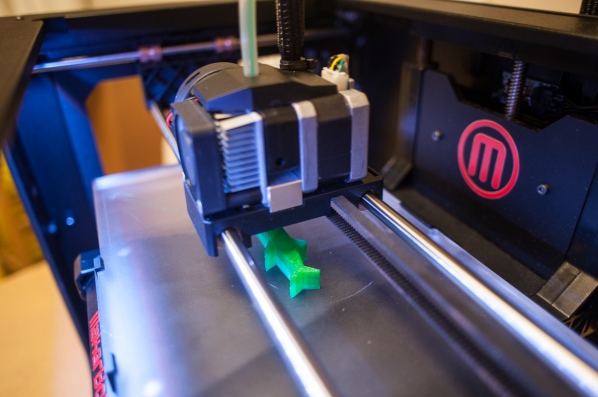
3D printer Replicator 2 (credit: MakerBot)
Will 3D printing make global supply chains unnecessary? That’s a real possibility, according to a recent report from Transport Intelligence, Smart Planet reports.
3D printing (or “additive manufacturing,” as it’s called in industrial circles) takes offshore manufacturing and brings it back close to the consumer. It has enormous potential to shift the trade balance. Goods will be cheaper to reproduce within the domestic market, versus manufacturing and then shipping them from a distant low-wage country.
The report (open access PDF), authored by John Manners-Bell of Transport Intelligence and Ken Lyon of Virtual-Partners Ltd., points to the growing role of automation in production resulting from 3D printing:
New technologies which are currently being developed could revolutionize production techniques, resulting in a significant proportion of manufacturing becoming automated and removing reliance on large and costly work forces. This in turn could lead to a reversal of the trend of globalization which has characterized industry and consumption over the last few decades, itself predicated on the trade-off between transportation and labor costs.
Companies may gradually move away from long-distance production as it gets cheaper to mass-produce at home. “There is obviously an enormous leap between a manufacturing process which can presently produce one-offs and one that can replace large scale manufacturing,” they say. “However, in theory, there is no reason why advances in technology could not increase the speed of production and reduce unit costs.”
The report adds that 3D printing “is already very good at producing products (even with moving parts) which previously would have required the assembly of multiple components,” and that by “eliminating the assembly phase there will be huge savings for the manufacturer in terms of labor costs.” 3D printing-based production could also reduce or eliminate storage, handling and distribution costs.
Eventually, products may even be produced right in consumers’ homes, reducing what was a series of supply-chain interactions to a software-based transaction.
When we wrote about the US judge in the Megaupload case siding with the US government in saying that, even without being able to technically serve the company (since it has no presence in the US), the criminal case could continue, we assumed that Megaupload would appeal. But even before appealing, the company is asking the judge to reconsider, based on an earlier request and the judge's own comments. The issue is that the judge's ruling only focused on whether or not the charges against Megaupload (but not the individuals charged in connection with the company) should be permanently dropped over the lack of service (in legal terms, it would be about having the charges dismissed "with prejudice"). However, the judge did note that perhaps it would make sense for the charges to be dropped without prejudice -- meaning that they would be dropped temporarily -- until such time as Kim Dotcom was extradited to the US, and could then be served as an "alter ego" for the company itself. The judge did not rule on that, however, since (he claimed) Megaupload had not asked for such a temporary dismissal.
In response, however, Megaupload quickly filed a motion reminding the judge that they had, in fact, suggested dismissal without prejudice back in July, quoting the transcript during oral arguments, which also points out why due process suggests this is the only proper result for a company that has effectively been killed and has no recourse since it hasn't truly been charged yet:
THE COURT: Well, that—can I require them to serve the company on any particular date? There's no date in the rule—there appears to be no statutory limitation, and I understand your due process argument. So I—what if I, you know, would start with a premise that I don't control when the Government decides to serve the company. Where do we go from there?
MR. BURCK: Well, Your Honor, we would submit that if the Court were ruling—going in that direction as a reasoning matter, that the appropriate result would be to dismiss the indictment without prejudice.
Because the company, again, has already suffered all the consequences of a criminal prosecution, so the—even if there's a trial and the company is acquitted and the individuals are acquitted, of course the company is still done.
So, we think that the due process claims trump all the other issues, and we think that if the Court were so inclined, that the Government should take certain steps in order to effectuate service, then—or if the extradition proceedings would be the relevant time line for that, again, the company should have an opportunity during that period of time to try to rehabilitate itself, because there isn't currently a criminal case that is sufficient for purposes of service and they've suffered massive harm.
So, of course, that would not be our preference, and we do think that the Supreme Court has said you can't change the rules of service, et cetera, but the—that’s all in our brief—but we do think that the alternative would be dismissal without prejudice, allow the Government at the appropriate time to then supercede the indictment again, add the corporation into the indictment.
And at that point, a year down the road, two years, however long it takes and wherever the MLAT process or the extradition process takes, at that point we could have this argument as to specific individuals, corporations, entities. But, in the meantime, having the company subject to the burden of a—the incredible burden of a criminal prosecution with no ability to defend itself and no service is an extraordinary result and one that is unprecedented.
In other words, Megaupload is saying dismiss this case until Dotcom is extradited, at which point (if he's ever extradited) then the company can be charged. But in the meantime, it's only fair to not have the company held back -- and the company did make that suggestion many months ago, contrary to the judge's suggestion otherwise.
Ask yourself. What would you do with your life if money was no object? An amazing lecture from the late Alan Watts.
 FUTURE PRIMATE