

MIND-CONTROLLED DRONE TAKES OFF
Mind-controlled applications and drones have been quite in vogue as of late, wouldn't you say? We've told you about scads of brain-computer interfaces and our list of drone-related projects stretches as far as the finger can click.
So, naturally, it came as no surprise when this landed in our lap: a brain-controlled quadcopter drone.
NEWS: Brain In a Dish Flies Plane
Researchers at Zhejian University in Hangzhou, China, developed the quadcopter with the intent to give those with impaired motor skills a new way to interact.
By wearing an emotiv electroencephalography (EEG) headset, the researchers showed how they can pilot the drone simply by thinking "left hard" to have quadcopter take off and land, "left lightly" to rotate, "right" to move it forward and "push" to have it fly up. If users clench their teeth, the drone descends. Blinking the eyes causes the on-board camera to snap a photo.
The EEG headset first relays commands from Bluetooth to a laptop, then via Wi-Fi to the drone. The quadcopter, named Flying Buddy 2, also live streams video footage of the flight back to the laptop to give users better control.
BLOG: Brain Hackers Pluck Your Private Data
Researchers will present their mind-controlled drone this week at the 14th International Conference on Ubiquitous Computing (Ubicomp 2012) in Pittsburgh, Pa. Check out the team's demo video below. Make sure to stick around until the end, where there's some pretty wicked drone-on-drone combat, a fight almost as fierce as the time Daniel LaRusso battled Johnny Lawrence for the All Valley Karate Tournament.
Hackers Release 1 Million Apple Device IDs Stolen From FBI Laptop
The hacker group AntiSec has released 1 million Apple device IDs that they say they obtained from an FBI computer they hacked.
The hackers say they actually stole 12 million IDs, including personal information, from the hacked FBI computer, but released only 1 million in an encrypted file published on torrent sites.
In a lengthy post online, the hackers wrote that last March, they hacked a laptop belonging to an FBI agent named Christopher K. Stangl from the bureau’s Regional Cyber Action Team and the New York FBI office’s Evidence Response Team.
The hackers say the IDs were stored in a file on Stangl’s desktop titled “NCFTA_iOS_devices_intel.csv.”
The file, according to the hackers, contained a list of more than 12 million Apple iOS devices, including Unique Device Identifiers (UDID), user names, names of devices, types of devices, Apple Push Notification Service tokens, ZIP codes, cellphone numbers, and addresses. The hackers released only 1 million UDIDs, however, and did not release the accompanying personal information for the IDs.
Apple UDIDs are a 40-character alphanumeric string that is unique to each Apple device.
It’s not known why the FBI possessed the Apple IDs. The hackers suggested in a tweet from the the @AnonymousIRC account, that the FBI was using the information to track users.
12,000,000 identified and tracked iOS devices. thanks FBI SSA Christopher Stangl.
#AntiSec— AnonymousIRC (@AnonymousIRC) September 4, 2012
List of U.S. President Barack Obama’s Accomplishments During First 2 Years in Office
List of some of President Obama’s accomplishments during his first 2 years in office. Latest accomplishments: Osama Bin Laden assassination, retirement of the NASA space shuttle program, Troop withdrawal from Iraq…
1. Ordered all federal agencies to undertake a study and make recommendations for ways to cut spending
2. Ordered a review of all federal operations to identify and cut wasteful spending and practices
3. Instituted enforcement for equal pay for women
4. Beginning the withdrawal of US troops from Iraq
5. Families of fallen soldiers have expenses covered to be on hand when the body arrives at Dover AF
6. Ended media blackout on war casualties; reporting full information
7. Ended media blackout on covering the return of fallen soldiers to Dover AFB; the media is now permitted to do so pending adherence to respectful rules and approval of fallen soldier’s family
8. The White House and federal government are respecting the Freedom of Information Act
9. Instructed all federal agencies to promote openness and transparency as much as possible
10. Limits on lobbyist’s access to the White House
11. Limits on White House aides working for lobbyists after their tenure in the administration.
12. Ended the previous stop-loss policy that kept soldiers in Iraq/Afghanistan longer than their enlistment date
13. Phasing out the expensive F-22 war plane and other outdated weapons systems, which weren’t even used or needed in Iraq/Afghanistan
14. Removed restrictions on embryonic stem-cell research
15. Federal support for stem-cell and new biomedical research
16. New federal funding for science and research labs
17. States are permitted to enact federal fuel efficiency standards above federal standards
18. Increased infrastructure spending (roads, bridges, power plants) after years of neglect.
19. Funds for high-speed, broadband Internet access to K-12 schools
20. New funds for school construction
21. The prison at Guantanamo Bay is being phased out
22. US Auto industry rescue plan
23. Housing rescue plan
24. $789 billion economic stimulus plan
25. The public can meet with federal housing insurers to refinance (the new plan can be completed in one day) a mortgage if they are having trouble paying
26. US financial and banking rescue plan
27. The secret detention facilities in Eastern Europe and elsewhere are being closed
28. Ended the previous policy; the US now has a no torture policy and is in compliance with the Geneva Convention standards
29. Better body armor is now being provided to our troops
30. The missile defense program is being cut by $1.4 billion in 2010
31. Restarted the nuclear nonproliferation talks and building back up the nuclear inspection infrastructure/protocols
32. Reengaged in the treaties/agreements to protect the Antarctic
33. Reengaged in the agreements/talks on global warming and greenhouse gas emissions
34. Visited more countries and met with more world leaders than any president in his first six months in office
35. Successful release of US captain held by Somali pirates; authorized the SEALS to do their job
36. US Navy increasing patrols off Somali coast
37. Attractive tax write-offs for those who buy hybrid automobiles
38. Cash for clunkers program offers vouchers to trade in fuel inefficient, polluting old cars for new cars; stimulated auto sales
39. Announced plans to purchase fuel efficient American-made fleet for the federal government
40. Expanded the SCHIP program to cover health care for 4 million more children
41. Signed national service legislation; expanded national youth service program
42. Instituted a new policy on Cuba , allowing Cuban families to return home to visit loved ones
43. Ended the previous policy of not regulating and labeling carbon dioxide emissions
44. Expanding vaccination programs
45. Immediate and efficient response to the floods in North Dakota and other natural disasters
46. Closed offshore tax safe havens
47. Negotiated deal with Swiss banks to permit US government to gain access to records of tax evaders and criminals
48. Ended the previous policy of offering tax benefits to corporations who outsource American jobs; the new policy is to promote in-sourcing to bring jobs back
49.. Ended the previous practice of protecting credit card companies; in place of it are new consumer protections from credit card industry’s predatory practices
50. Energy producing plants must begin preparing to produce 15% of their energy from renewable sources
51. Lower drug costs for seniors
52. Ended the previous practice of forbidding Medicare from negotiating with drug manufacturers for cheaper drugs; the federal government is now realizing hundreds of millions in savings
53. Increasing pay and benefits for military personnel
54. Improved housing for military personnel
55. Initiating a new policy to promote federal hiring of military spouses
56. Improved conditions at Walter Reed Military Hospital and other military hospitals
57. Increasing student loans
58. Increasing opportunities in AmeriCorps program
59. Sent envoys to Middle East and other parts of the world that had been neglected for years; reengaging in multilateral and bilateral talks and diplomacy
60. Established a new cyber security office
61. Beginning the process of reforming and restructuring the military 20 years after the Cold War to a more modern fighting force; this includes new procurement policies, increasing size of military, new technology and cyber units and operations, etc.
62. Ended previous policy of awarding no-bid defense contracts
63. Ordered a review of hurricane and natural disaster preparedness
64. Established a National Performance Officer charged with saving the federal government money and making federal operations more efficient
65. Students struggling to make college loan payments can have their loans refinanced
66. Improving benefits for veterans
67. Many more press conferences and town halls and much more media access than previous administration
68. Instituted a new focus on mortgage fraud
69. The FDA is now regulating tobacco
70. Ended previous policy of cutting the FDA and circumventing FDA rules
71. Ended previous practice of having White House aides rewrite scientific and environmental rules, regulations, and reports
72. Authorized discussions with North Korea and private mission by Pres. Bill Clinton to secure the release of two Americans held in prisons
73. Authorized discussions with Myanmar and mission by Sen. Jim Web to secure the release of an American held captive
74. Making more loans available to small businesses
75. Established independent commission to make recommendations on slowing the costs of Medicare
76. Appointment of first Latina to the Supreme Court
77. Authorized construction/opening of additional health centers to care for veterans
78. Limited salaries of senior White House aides; cut to $100,000
79. Renewed loan guarantees for Israel
80. Changed the failing/status quo military command in Afghanistan
81. Deployed additional troops to Afghanistan
82. New Afghan War policy that limits aerial bombing and prioritizes aid, development of infrastructure, diplomacy, and good government practices by Afghans
83. Announced the long-term development of a national energy grid with renewable sources and cleaner, efficient energy production
84. Returned money authorized for refurbishment of White House offices and private living quarters
85. Paid for redecoration of White House living quarters out of his own pocket
86. Held first Seder in White House
87. Health care reform.
88. Student loan reform
89. Ordered the assassination of Osama Bin Laden, long sought by the U.S. military and intelligence services as the leader of Al Qaeda.
90. Retired the U.S. space shuttle program, saving billions in space expenditure and giving Russia a definitive lead in space exploration. July 8, 2011.
91. Overthrew the regime of Moammar Gaddaffi in Libya.
92. Withdrew U.S. troops from Iraq.
Rep. John Lewis, Civil Rights Icon, on the Struggle to Win–and Now Protect–Voting Rights in U.S.
We spend the hour looking at the bloody struggle to obtain — and protect — voting rights in the U.S. with the civil rights icon, now 13-term Georgia congressmember, John Lewis. During the 1960s, Rep. Lewis was arrested more than 40 times and beaten almost to death as he served as chair of the Student Nonviolent Coordinating Committee, marched side by side with Dr. Martin Luther King Jr., helped organize the Freedom Rides, campaigned for Robert Kennedy’s presidential bid, and spoke at the 1963 March on Washington. He has just written a new memoir looking back on his more than 50 years of political involvement, "Across That Bridge: Life Lessons and a Vision for Change."
Having risked his life marching for the right of all Americans to vote, Lewis reflects on the ongoing struggle for voting rights today, when 16 states have passed restrictive voting laws that critics say target people of color. "It is so important for people to understand, to know that people suffered, struggled," Lewis says. "Some people bled, and some died, for the right to participate. The vote is the most powerful nonviolent tool that we have in a democratic society. It’s precious. It’s almost sacred. We have to use it. If not, we will lose it." [includes rush transcript]
Rep. John Lewis, 13-term Democratic congressman from Georgia. He was a leader of the civil rights movement, served as chair of the Student Nonviolent Coordinating Committee, helped organize the Freedom Rides, and spoke at the 1963 March on Washington. He is author of the new book, Across That Bridge: Life Lessons and a Vision for Change.
New York AG investigating Bain Capital, other firms for tax evasion
New York Attorney General Eric Schneiderman has launched an investigation into whether some large private equity firms—among them Bain Capital, the firm founded by Republican presidential candidate Mitt Romney—took advantage of a tax loophole to avoid paying hundreds of millions of dollars in taxes.
According to the New York Times, who first reported the story, executives with knowledge of the investigation said Schneiderman had subpoenaed around a dozen firms in the past few weeks seeking any documents that could shed light on their tax-writing procedures. At issue is whether those firms used a shady, legally-dubious practice of labeling certain fees as investments, thus allowing them to be taxed at a far lower rate to produce huge savings over the long run.
Last month, Gawker obtained and posted nearly one thousand pages of Bain’s finances, revealing that the firm utilized the controversial tax strategy to classify at least $1 billion in fees as capital gains-producing investments. While the fees could have been taxed at up to a 35 percent rate, as investments they were subject to a more modest 15 percent rate, saving Bain around $200 million.
http://www.youtube.com/watch?feature=player_embedded&v=u2EaE80TiiQ
He had just humiliated the most powerful nation in the world, heading one of the most controversial cyber operations in history. So when Julian Assange arrived in Sweden in August 2010 he was greeted like a conquering hero. But within weeks there was a warrant out for his arrest and he was being investigated for rape and sexual molestation. However, as the details of the allegations against Assange emerged, suspicions arose over the legal barrage being aimed at him. Exploring the mysterious circumstances surrounding the case, this doc gets to the heart of a bizzare tale of international cat and mouse. "Sitting outdoors with the world's coolest, smartest people! It's amazing!", Anna Ardin tweeted, as she sat at a barbecue she had arranged for Assange. Yet according to the allegations she would later bring against him he had recently sexually abused her. "You wouldn't send such messages if you had been raped by someone the night before", argues Assange's lawyer. Both Assange and his supporters believe the attempt to force his return to Sweden is simply the first step in a plan to see him extradited to the United States and that the case against him is a set up. It's clear that when Assange arrived in Sweden Anna Ardin & Sofia Wilen were both enthralled by the Wikileaks phenomena and he slept with both women over a period of weeks. The charges originated with a misunderstanding in a Stockholm police station that "some sort of sex crime had been committed". Wilen refused to sign what had been taken down. Assange was interviewed but not charged with any offence. But 12 days after being given permission to leave the country, the case was re-opened and the Swedes issued a warrant for his arrest. At this point Assange was at the height of his powers and three weeks later he delivered a massive hit against America: the Iraq War Logs. An outraged US labelled him a "traitor" and were overcome with calls to "shoot the son-of-a-bitch". Shortly afterwards Sweden issued an Interpol Red Notice for his arrest; a highly unusual move. "Red Notices are normally the preserve of terrorists and dictators. Even Gaddafi was not subject to a Red Notice." After 500 days of fighting extradition from the UK to Sweden, Assange made his dramatic dash to the Ecuadorian embassy. In an interview from inside, Assange claims he had sensed the net tightening around him when, "the Swedish government publicly announced that it would detain me without charge in severe conditions. On the same evening security contractors turned up unannounced at 10:30pm and insisted on fitting another manacle to my leg". Following the complex twists and turns of the entire saga, this documentary charts a case far more complex than the Swedes seem to be admitting to. When pressed about the strange manner in which the charges were brought the answer is baffling: "I can very well understand the confusion...it is very difficult to understand, well, exactly how it works." And as Assange's US lawyer points out, he should be worried. "I'd be very nervous, because if the United States get their hands on you, you're a goner."
Add It Up: Taxes Avoided by the Rich Could Pay Off the Deficit
Conservatives force the deficit issue, ignoring job creation, and insisting that tax increases on the rich wouldn't generate enough revenue to balance the budget. They're way off. But it takes a little arithmetic to put it all together. In the following analysis, data has been taken from a variety of sources, some of which may overlap or slightly disagree, but all of which lead to the conclusion that withheld revenue, not excessive spending, is the problem.
Audit of the Federal Reserve Reveals $16 Trillion in Secret Bailouts
The first ever GAO (Government Accountability Office) audit of the Federal Reserve was carried out in the past few months due to the Ron Paul, Alan Grayson Amendment to the Dodd-Frank bill, which passed last year. Jim DeMint, a Republican Senator, and Bernie Sanders, an independent Senator, led the charge for a Federal Reserve audit in the Senate, but watered down the original language of the house bill(HR1207), so that a complete audit would not be carried out.
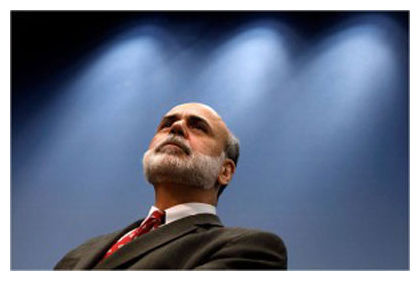
Ben Bernanke (pictured to the right), Alan Greenspan, and various other bankers vehemently opposed the audit and lied to Congress about the effects an audit would have on markets. Nevertheless, the results of the first audit in the Federal Reserve's nearly 100 year history were posted on Senator Sander's webpage earlier this morning.

 FUTURE PRIMATE